

What does it means to speak a language?
First of all, what does it mean to speak a language?
To speak a language means to be able to communicate using that language. This ability can be broken down into the different tasks or skills listed in the self-assessment grid of the self assessment grid of the Common European Framework of Reference for Languages (CEFRL).The grid distinguishes:
- Understanding, divided into listening and reading
- Speaking, divided into spoken interaction and spoken production
- Writing
But if we look more closely at what a learner actually has to do, these broad skills can be broken down further.
To master a language, you have to:
- Know the meaning of an adequate number of words and chunks in the target language. This is easier when words are similar to those in languages already known by the learner. For example, French and Spanish words are generally easier for an Italian to learn than German words.
- Recognize written words in the target language. For a Westerner, this task becomes much more challenging when the language uses a different writing system, such as Chinese characters or the Cyrillic alphabet. Words are also easier to recognize when they resemble words in languages already known by the learner.
- Write the words of the target language.
- Recognize words when they are pronounced by native speakers. This is more difficult when the target language uses sounds that do not exist in languages already known by the learner. It also becomes harder when there is no simple correspondence between sounds and letters or combinations of letters. Obviously, recognizing a spoken word is much easier if you already know the word.
- Pronounce words so that native speakers can recognize them.
- Understand the meaning of combinations of recognized words used by native speakers. This becomes easier when the grammatical structure of the target language is similar to that of languages already known by the learner.
- Create meaning by combining words according to the rules used by native speakers, when speaking.
- Create meaning by combining words according to the rules used by native speakers, when writing.
Learning a language therefore means progressively mastering tasks 1 to 8.
Different challenges in learning a language, depending on language and learner
Different languages pose different challenges to different learners.
For an Italian learner like me, the eight tasks involved in learning German have approximately the following levels of difficulty. These ratings are obviously subjective: 10 means extremely difficult for me, not intrinsically difficult for everybody.
| Task | Difficulty | Why |
|---|---|---|
| 1. Know an adequate number of words | 8 | Although some German words are similar to English words or come from Latin or Greek, and therefore resemble Italian words, most are different. An additional problem is remembering the grammatical gender of every noun. |
| 2. Recognize written words | 2 | The German alphabet is very similar to the Italian one, so this is easy. It does not require much specific training. |
| 3. Write the words | 1 | Again, the writing system is very similar to Italian and spelling is relatively manageable. |
| 4. Recognize words pronounced by native speakers | 4 | Most German sounds are understandable to an Italian speaker. Once you know a word, recognizing it inside a sentence is not excessively difficult. |
| 5. Pronounce words so that native speakers recognize them | 5 | For an Italian speaker it is relatively easy to pronounce German well enough to be understood, even if the pronunciation is far from perfect. |
| 6. Understand meanings created by combinations of words | 6 | Once you know the words, including the relevant conjugated forms of verbs, understanding is usually manageable. |
| 7. Create meaning when speaking | 10 | German grammar is complicated. Articles, nouns, adjectives, possessives and verbs change form, and sentence structure differs considerably from Italian. |
| 8. Create meaning when writing | 10 | The same problems apply, with the additional expectation of greater grammatical accuracy. |
This profile would obviously be very different for another learner or another target language. A Chinese learner of German, an Italian learner of Chinese and an English learner of Spanish face very different problems.
Which tasks to privilege when learning a language?
When learning a language, all the tasks listed above eventually need to be mastered. But they do not need to receive the same amount of attention at the same time.
The tasks to prioritise depend first of all on the reason for learning the language. For example, if your goal is mainly to translate written German into Italian, tasks 1 and 6 are much more important than pronunciation.
Priorities also depend on the learner’s level.
In my opinion, beginners should first aim at basic communication. Being able to communicate in the target language, however imperfectly, motivates the learner and keeps him or her going. I call this the snowball effect, which I will discuss below.
For a beginner learning German, I would therefore start with:
- learning perhaps 100–200 useful words and expressions;
- learning to recognize these words when native speakers pronounce them;
- learning to pronounce them in an understandable way;
- learning to understand very simple combinations of words;
- learning to create very simple meanings when speaking.
The objective at this stage is not grammatical perfection.
It is communication.
The tyranny of grammar
For basic communication, you do not need to know German grammar in detail.
Once you know the main words in a sentence, you can very often understand its general meaning without correctly analysing every ending of every article, adjective and noun.
In many everyday situations, knowing the exact gender of every noun is also much less important than knowing the noun itself.
In my opinion, beginners in German should therefore concentrate first on learning the words and expressions needed for everyday interactions, rather than devoting large amounts of time to articles and declension tables.
Naturally, grammar should be learned progressively. It improves the quality, precision and complexity of communication.
But I would reverse the traditional sequence.
The traditional approach is:
First learn grammar; then you will be able to communicate.
My approach is:
First learn to communicate; then use grammar to communicate better.
At school, grammar is often prioritised at the expense of conversation and vocabulary.
My teacher on a German course I attended in Berlin – which I will discuss later – once told me: “At school you learn grammar; then you practise German conversation with friends.”
The problem is that students are often taught grammar that is far more advanced than their ability to communicate.
I experienced this myself.
At secondary school I studied English for three years, but lessons were conducted in Italian and focused mainly on grammar. My communication skills remained very poor. My English teacher at high school followed basically the same approach.
Then I enrolled in an afternoon Russian course. I attended it for only about three months because I eventually had to devote more time to some school subjects in which I was doing badly.
During most of those Russian lessons, however, the teacher continuously asked us questions and made us answer.
After just a few lessons, my ability to communicate in Russian was better than my ability to communicate in English after years of studying English.
Eventually I finished high school with a good knowledge of English grammar – which, since I was not using it, I soon forgot – and very limited communication skills.
Learn systematic grammar or only the grammar you need
Systematic grammar also tends to present groups of related forms simultaneously.
You may be asked to learn an entire conjugation or all the declensions of possessive pronouns at once.
This makes learning more difficult.
The same problem occurs with vocabulary. Words with similar meanings are often taught together.
After a few days on my German course, our teacher was struggling to teach us the different meanings and uses of wollen, mögen, können, sollen, müssen and dürfen.
I told her that perhaps part of the problem was precisely that she was teaching us all these similar words at the same time.
She replied that in real life we had to be able to choose the right word in every situation.
Of course.
But my point was different: teach one form or one word, let it become firmly established, then introduce another.
That is much closer to what happens in informal learning.
Interestingly, the Nicos Weg course developed by Deutsche Welle and the Goethe-Institut does something similar: it introduces ich and du first, and only a few lessons later introduces er and sie.
Learn consciously or unconsciously
Human beings learn their first language with excellent results without studying grammar rules.
They hear language, recognize recurring patterns, repeat expressions and try to communicate.
Our brains are extraordinarily good at detecting patterns without needing someone to explain every pattern first.
A learner exposed repeatedly to similar phrases can gradually acquire structures without first memorising the corresponding grammatical rule.
This kind of learning relies heavily on chunks: recurring expressions and combinations of words that are learned as meaningful units.
The learner encounters a few endings and structures repeatedly rather than memorising every possible form at once.
Explicit grammar learning works differently. You listen to explanations, study paradigms, memorise rules and then apply them in exercises.
The problem is that time spent explaining and memorising grammar is time not spent listening, repeating, speaking and communicating.
Moreover, memorising large numbers of endings and abstract rules requires considerable effort and usually requires additional study at home.
Conscious learning requires willpower and intentional effort and can become tiring.
Implicit learning can also be demanding, of course, but much of it happens simply through exposure and use.
Its major disadvantage is time: natural acquisition through full immersion can take years.
So the real challenge is:
How can we make language learning work more like implicit learning, but much faster?
Chunks, repeated exposure and carefully selected communication practice are part of the answer.
Traditional grammar-based learning may allow successful and highly motivated students to progress quickly in some areas. But it also requires considerable effort while often producing disappointing results in actual communication.
Imagine a class in which, after one month, the teacher is satisfied because twenty grammar rules have been explained. Perhaps one third of the students can remember all twenty rules. And perhaps only a small minority can actually use them spontaneously while communicating.
Would we call that successful teaching?
I would not.
The snowball effect
If learners make an initial effort and discover that they can actually communicate, they want to learn more.
Success produces motivation, and motivation produces further learning.
This is the snowball effect.
The opposite is what I call the climb effect: learners make an effort but see little practical result. The summit – actually being able to communicate – still seems very far away.
Eventually they give up.
Learning a language requires frequent practice, rather like going to the gym. For that reason, maintaining motivation is crucial.
Early communication gives learners a reason to continue.
My past experience with learning German
I never studied German systematically.
When I was young, I lived for two months in Berlin and for one month in Stuttgart, where I worked at Bosch.
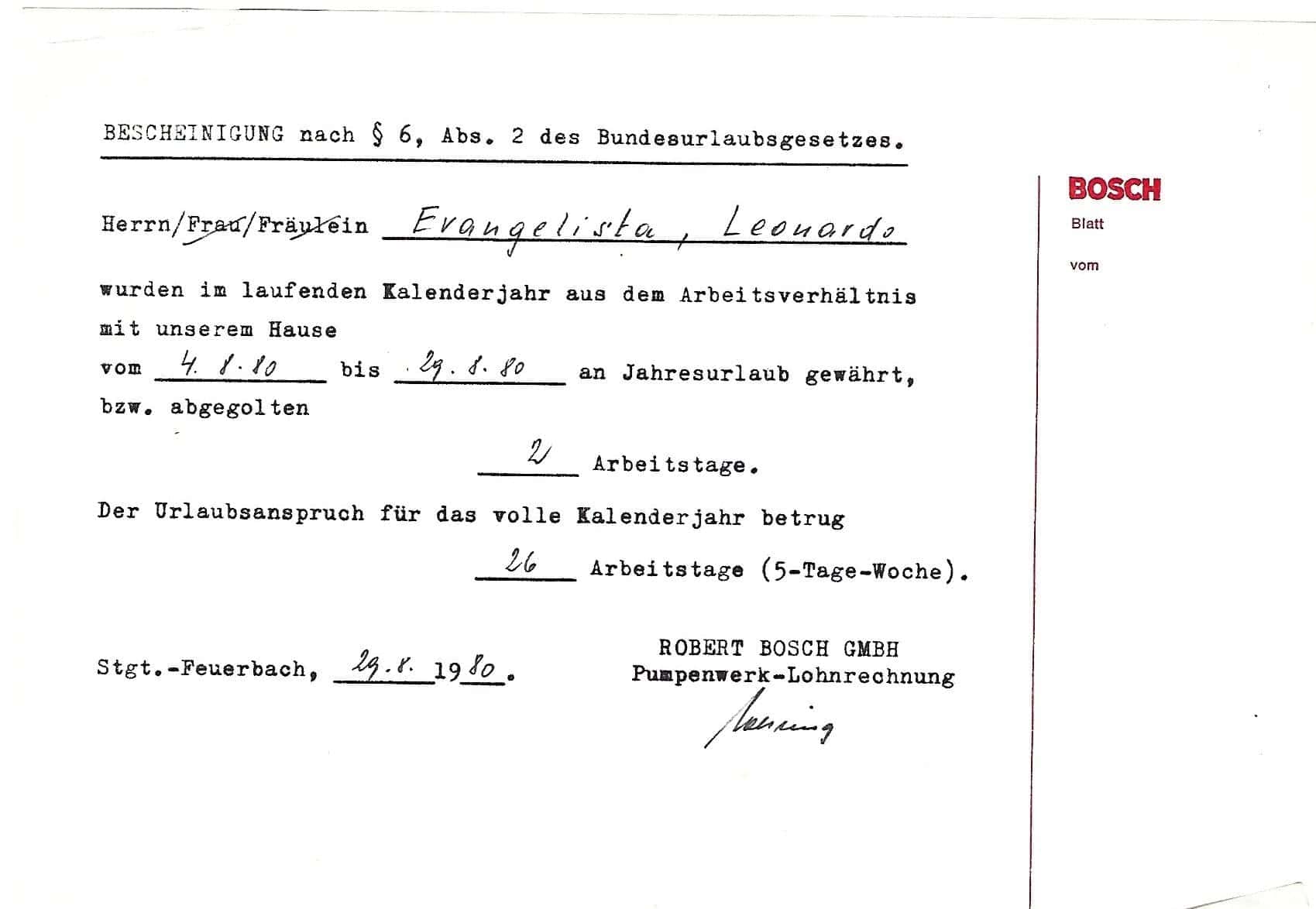
I took a few German lessons at my Italian university, attended a one-month course – if I remember correctly – in Vienna, and studied a little on my own.
I even passed a German exam at university with a respectable 26/30, although the general level required at that time was very low.
The exam consisted of a dictation and an oral test in which we had to translate a text from German – the Vertrag des Handelsvertreters – which I had simply learned by heart.
Later, whenever I had a German girlfriend, I occasionally dusted off my German books.
That was more or less all.
In August 2018 I enrolled in a two-week German course at the GLS School in Berlin.
A few weeks before going to Berlin, I started studying on my own using apps. The best one I found was DW Learn German. I liked it because learning felt quick and I had the impression that I was improving constantly.
I also experimented with flashcard apps to learn vocabulary. By the time I arrived in Berlin, I felt reasonably confident.
The GLS School has a very pleasant location and excellent facilities — including a swimming pool and a sauna — a canteen, many students to interact with, at least in August, and recreational activities in German every afternoon.
But I did not like the teaching method.
I am not good at memorising lists of endings.
Furthermore, I enrolled in the semi-intensive course, which included additional lessons two afternoons a week; I participated in all the recreational activities; and at the same time I continued working remotely.
I simply did not have enough time to study at home or continue my self-study programme.
In the end, I made less progress than some of my classmates and finished the course feeling rather disempowered.
There was, however, one surprising moment.
One day the teacher asked us for the German word for bowl, and I immediately answered Tiefel — apparently connecting it with tief, “deep”.
A neuron that had remained silent for more than thirty years had suddenly fired.
The perversions of the German language
- German has three grammatical genders — masculine, feminine and neuter — and for many nouns there is no obvious way to predict which one applies. You simply have to learn the gender together with the noun.
- Both definite and indefinite articles are declined according to case — nominative, accusative, dative and genitive.
- Definite and indefinite articles do not even use parallel endings. For example, nominative masculine is der but ein, not einer.
- Der is the masculine nominative definite article, but it is also used for feminine dative and genitive forms.
- see Abbas Khider, Deutsch fuer Alle
See also
- The Eight-Task Model in Learning Languages: From Diagnosis to Learning Design
- How to learn many words in a foreign language: techniques for the classroom and for self-study (Task 1 of 8)
- How to hear and pronounce the words of a foreign language: techniques for the classroom and for self-study (Tasks 4 and 5 of 8)
Articolo contenuto sul sito www.orientamento.it. Autore © Leonardo Evangelista con l’aiuto dell’IA. Leggi Informativa privacy, cookie policy e copyright.